
Direct Answer for Property Owners
In a classic Waterbury three-family triple-decker, plumbing is stacked vertically across three identical floor plans, sharing a single main cast-iron drainage stack and shared vertical supply risers. If you own or manage a multi-family property in neighborhoods like Town Plot, Brooklyn, or the North End, installing an independent basement manifold with quarter-turn brass ball valves for each apartment is the single most effective plumbing upgrade you can make. It isolates individual units during emergencies or routine fixture repairs, eliminating the need to shut off domestic water to the entire building.
Summary Guide
Waterbury is home to thousands of wood-frame three-family triple-deckers built between 1890 and 1940. Understanding how shared vertical cast-iron stacks, uninsulated exterior risers, and basement shutoffs work is essential for every multi-family owner and landlord.
How vertical plumbing stacks connect three apartments
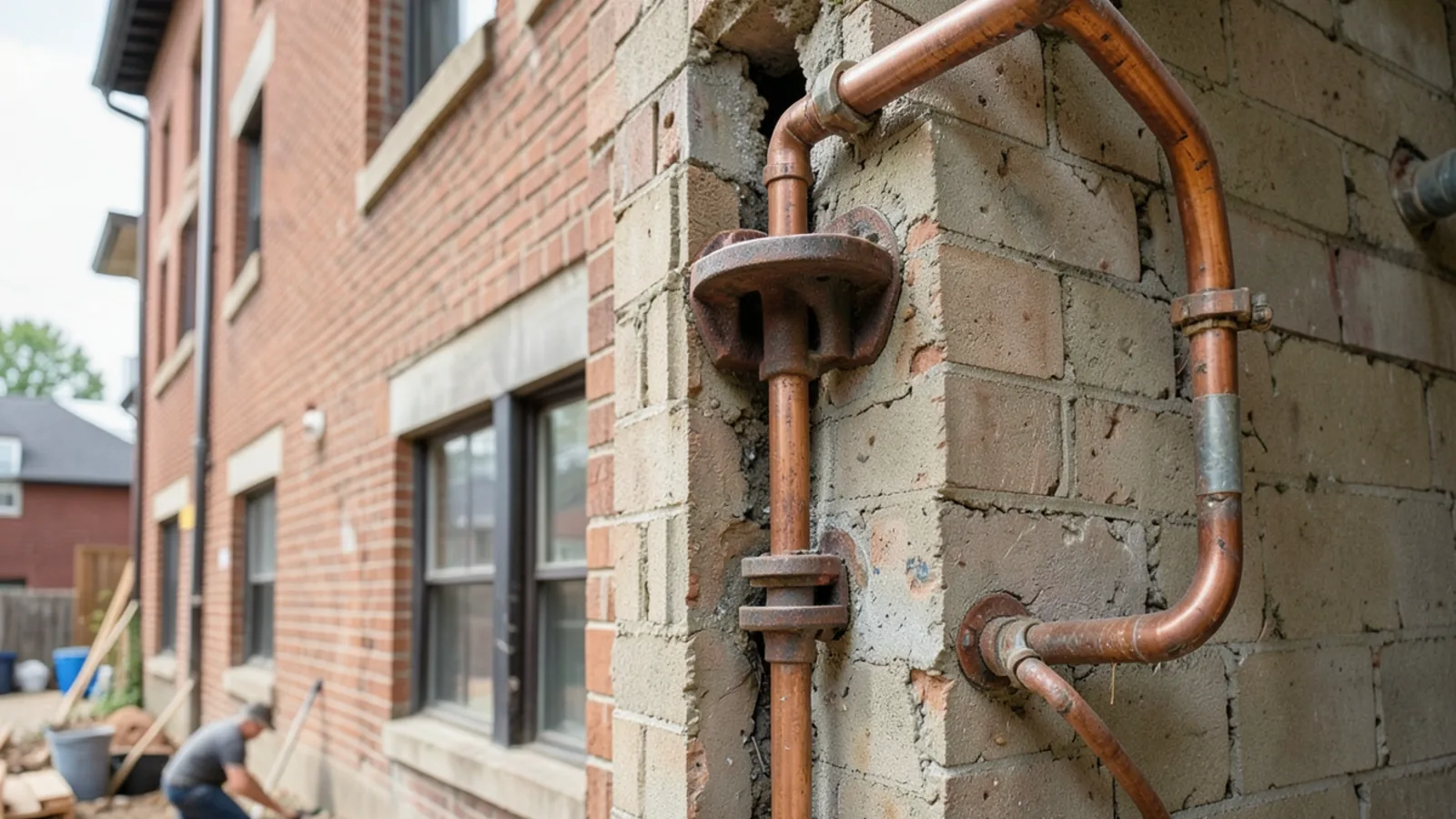
In a classic Waterbury triple-decker, bathrooms and kitchens are stacked directly on top of each other across the first, second, and third floors. This layout allowed historic builders to run a single vertical cast-iron soil stack—typically 4 inches or 5 inches in diameter—from the basement floor straight up through the roofline. Sinks, bathtubs, and water closets on each floor tie directly into this central column using cast-iron sanitary tees and lead-oakum hub connections.
While this construction pattern was exceptionally cost-effective to construct during Waterbury brass manufacturing boom from 1890 to 1930, it creates unique hydraulic vulnerabilities for modern multi-family property owners. Because all three dwelling units discharge wastewater into the identical vertical column, any blockage downstream affects the lowest apartment immediately.
For example, when a severe clog occurs in the main stack between the first-floor ceiling and the basement drop, wastewater draining from the second-floor and third-floor kitchens and bathrooms cannot exit into the municipal sewer. Instead, the accumulating volume backs up into the lowest available fixture: the first-floor bathtub or kitchen sink. Knowing the precise location of main cleanout plugs in your basement cellar is critical to clearing clogs before wastewater overflows onto hardwood floors.
Where to Find Shutoff Valves in a 2- or 3-Family Triple-Decker
Note: Plumbing layouts vary by property age and past renovations. Look for the main pipe entry near your street foundation wall.
At property line. City shutoff key required.
Basement front wall. Shuts off entire building.
Separate valves for Fl 1, Fl 2, Fl 3.
Water feeds up through interior wall chases.
Usually a large brass wheel or quarter-turn ball valve located right before the water meter where the copper or lead line enters the basement foundation.
On repiped buildings, separate valves isolate individual apartments. If marked clearly, turn only the affected unit valve to avoid cutting off your neighbors.
Under sinks and behind toilets, small oval or lever shutoffs isolate individual fixtures. Use these first for minor localized dripping.
Direct Local Dispatch
Need help with your Waterbury plumbing?
Waterbury Multi-Family Landlord Plumbing Audit Checklist
- •Locate and tag the primary municipal water meter and city curb box shutoff key location.
- •Verify that every individual apartment possesses a dedicated, clearly labeled quarter-turn water isolation valve in the basement.
- •Inspect the base elbow and vertical seams of the cast-iron soil stack for rust blisters, weeping water, or hairline fractures.
- •Check unheated hallway chases, back stairwells, and balloon-frame exterior wall cavities for uninsulated copper or galvanized water lines.
- •Confirm every hot water heater is equipped with a functioning ASME temperature-and-pressure (T&P) relief valve and thermal expansion tank.
- •Ensure that cleanout access plugs on the basement drainage lateral are brass or PVC and unobstructed by storage or debris.
Waterbury Multi-Family Plumbing: Vintage Systems vs Modern Upgrades
| System Component | Original Pre-1940 Installation | Common Failure Mode | Modern Code-Compliant Solution |
|---|---|---|---|
| Main Soil Stack | 4-inch or 5-inch hub-and-spigot cast iron with lead-oakum joints | Corrosion flaking, interior rust scale, seam fractures, sewer gas odors | Schedule 40 cellular core PVC with heavy-duty mechanical transition couplings |
| Branch Waste Lines | Threaded galvanized steel and unvented lead bends beneath toilets | Internal diameter constriction, pinhole leaks, toilet wax ring failure | Schedule 40 PVC branches with modern air admittance valves or roof vents |
| Water Supply Risers | 1-inch to 1-1/4-inch galvanized iron run inside exterior wall cavities | Rust scale causing restricted flow, discolored water, freeze bursts | Dedicated 3/4-inch Uponor ProPEX (PEX-A) risers run through interior chases |
| Basement Water Manifold | Single main gate valve near the city meter for the entire property | Seized gate valves, whole-building shutoff required for single faucet repair | Dedicated copper or brass manifold with individual quarter-turn ball valves |
| Water Heating System | Single shared storage boiler or unvented water heaters in cellar | Exhaust backdrafting into basements, lack of thermal expansion tanks | Individual direct-vent hybrid heat pumps or high-recovery atmospheric tanks |
The risk of uninsulated pipes along balloon-frame exterior walls
The vast majority of multi-family triple-deckers in Waterbury—predominantly concentrated in neighborhoods like Brooklyn, Town Plot, the North End, and the East End—were framed using traditional balloon framing. Unlike modern platform framing where each story floor deck creates a fire-break and draft stop between levels, balloon framing features exterior wall studs that extend unbroken from the foundation sill plate to the attic.
Plumbing supply risers in these historic buildings were frequently routed inside exterior wall cavities, unheated rear entry stairwells, or unconditioned pantry chases to maximize usable interior living space. Because these exterior walls were built without fiberglass or cellulose insulation, cold New England winter drafts circulate freely around the plumbing.
During January and February cold snaps—when Waterbury temperatures frequently drop into the single digits for consecutive nights—these uninsulated vertical risers freeze solid within hours. If the pipes rupture, pressurized domestic water escapes into the interior wall cavities, cascading down through lath-and-plaster ceilings across multiple apartments and generating thousands of dollars in structural and electrical damage.
Why independent apartment shutoff valves protect your investment
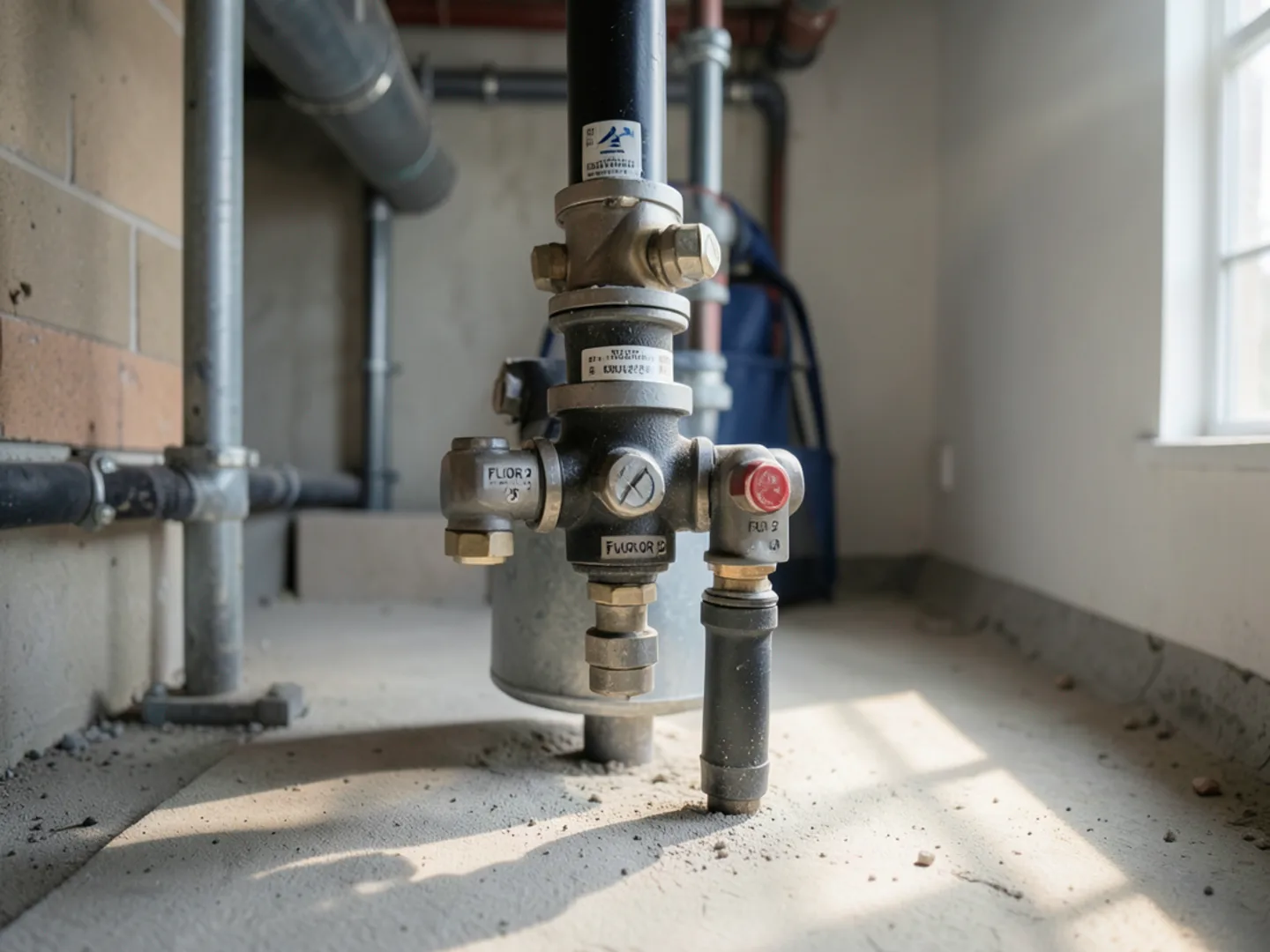
Historically, triple-deckers were plumbed with only a single primary gate valve situated immediately adjacent to the municipal water meter in the basement cellar. In an original layout, a simple dripping bathroom faucet cartridge, running toilet fill valve, or dishwasher connection on the third floor required shutting off water service to the entire three-family building.
Shutting down whole-building water service creates significant friction with tenants, violates state tenant habitability standards when sustained, and complicates routine maintenance. Modernizing your multi-family plumbing infrastructure with a dedicated basement water distribution manifold resolves this challenge completely.
A properly engineered manifold branches off the main incoming municipal line into three separate 3/4-inch domestic supply lines, each protected by an independent brass full-port quarter-turn ball valve and dedicated drain-down port. This configuration empowers landlords and service technicians to isolate a single apartment for scheduled fixture replacements or sudden emergency pipe leaks, preserving continuous water pressure and domestic hot water for the remaining two families.
Signs your cast-iron drainage stack is failing and requires replacement
Cast-iron drainage plumbing in pre-1940 Waterbury triple-deckers has surpassed its anticipated engineering lifespan. Decades of exposure to caustic household chemicals, acidic waste streams, and thermal expansion cycles degrade cast iron from the inside out.
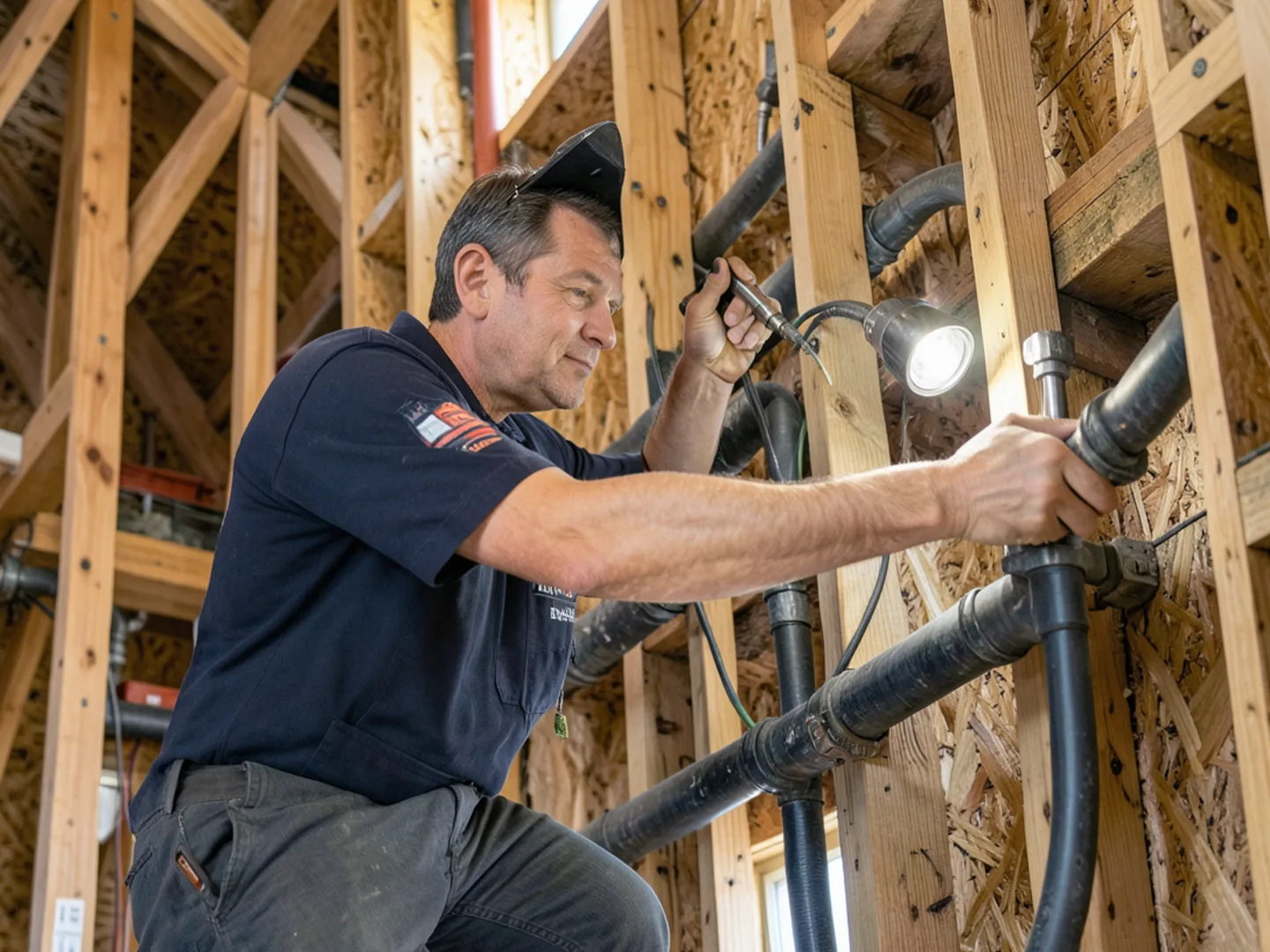
The earliest indicator of stack deterioration is flaking rust scale and damp discoloration along the vertical pipe seam in the basement. As interior corrosion progresses, the pipe wall thins, leading to longitudinal hairline fractures that weep foul-smelling wastewater whenever upper-floor tenants drain bathtubs or washing machines.
Persistent sewer gas odors in basement storage areas or first-floor bathrooms frequently indicate that the lead-and-oakum joint seals between pipe bells have dried out or shifted. Replacing a failing cast-iron soil stack with modern Schedule 40 cellular core PVC eliminates internal corrosion, creates mirror-smooth flow characteristics that resist grease blockages, and provides permanent structural reliability.
Waterbury municipal code requirements for multi-family plumbing work
In the City of Waterbury, plumbing modifications in multi-family dwellings are governed by the Connecticut State Building Code and municipal regulations enforced by the Waterbury Department of Inspections. Because multi-family buildings house multiple unrelated families, life safety and sanitation standards are strictly enforced.
Under Connecticut state law, plumbing alterations—including water heater replacements, repiping, drainage stack replacements, and gas line modifications—cannot be performed as DIY landlord projects. Permits must be pulled by a licensed State of Connecticut Master Plumber holding a valid P-1 credential.
Furthermore, any work involving the municipal water meter, street curb stop valve, or backflow prevention devices must be coordinated with the City of Waterbury Bureau of Water. Adhering to municipal permitting protects building owners from code violation citations, ensures insurance coverage validity, and verifies that installations meet modern fire and life-safety codes.
Master Plumber Technical Insights
In balloon-framed Waterbury triple-deckers, structural wall studs run continuously from the foundation sill plate to the third-floor roof rafters without horizontal fire-blocking. When cold winter winds sweep across hills in Town Plot or Overlook, freezing air drafts up these open stud bays like a chimney. Water lines installed in these exterior bays will freeze solid even when the tenant apartment living room is heated to 70°F. Never run plumbing in exterior balloon-frame walls without closed-cell spray foam insulation and internal draft sealing.
When replacing deteriorated sections of a vertical cast-iron stack in a three-family residence, you must mechanically secure the remaining upper stack weight with heavy-duty steel riser clamps bolted across floor joists on every story. An unsupported 30-foot cast-iron stack weighs over 600 pounds. Cutting through a cracked lower section without structural clamping will cause hundreds of pounds of iron pipe to drop through the ceilings below, creating catastrophic structural and property damage.
Frequently Asked Questions
Licensed Master Plumber Staff
Technical guidance verified by a State of Connecticut licensed Master Plumber (P-1 #0286392). Based at 232 Bradley Ave, Waterbury, CT.